
Conference Speakers


Mark Batchelder
Attorney at Law / Owner and Principal Instructor
Attorney at Law / Owner and Principal Instructor
MEDIATION DYNAMICS
Mark W. Batchelder has been an attorney in Fort Worth since 1987 and a mediator since 1990. He was an adjunct college professor of mediation and is the owner of and instructor for Mediation Dynamics, which has trained hundreds of people to be mediators since 2000. Mark is the President of the Tarrant County Association of Mediators. He is also an officer, director, and approved trainer for the Texas Mediation Trainers Roundtable. Mark is a guitar instructor for and the Executive Director of Community Music Connection, a 501(c)(3) nonprofit organization. He was a founding member of the band, Panther City Rounders. He is also the owner and manager of Mountainbrooks Ranch, a small guest ranch near Estes Park, Colorado. He is a devoted husband and proud father whose daughter is a concert violinist.

Lisbeth M. Bulmash
Mediator and Arbitrator
Mediator and Arbitrator
JAMS
Lisbeth M. Bulmash has over 20 years of dispute resolution expertise. Before serving as a mediator and arbitrator, Lis worked as a litigation attorney in an array of firms, including a law firm specializing in defense, a law firm representing plaintiffs, and a national property casualty insurance company. These experiences prepared Lis for her career in dispute resolution, where she primarily handles business commercial, personal injury, professional negligence, employment, healthcare, estates/probate/trusts and real property cases. She is a speaker and course instructor on various ADR-related topics. Lis is currently on the Board for the JAMS Foundation, the Texas Mediator Credentialing Association, University of Michigan Dallas Alumni Board and is President of the Association of Attorney-Mediators’ National Board of Directors. She has served as Chair of the ADR Section at the Dallas Bar Association and a Council Member for the ADR Section of the State Bar of Texas.

Othel Bursey, Jr.
ADR Coordinator
ADR Coordinator
Dallas County Dispute Resolution Center
Othel Bursey, Jr., a native of Illinois, has improved the efficiency and effectiveness of both state and county government in his more than 20 years of administrative and management experience. Currently, he serves as the ADR Coordinator and Administrator over the Dallas County Dispute Resolution Center (DCDRC). This Center has reached a milestone of 13 years of operation and currently is one of two county-administered programs in North Texas. The DCDRC receives case referrals directly from the Civil District Courts, Family District Courts, County Courts at Law, Probate, and Justice of the Peace Courts. Othel holds a master’s degree in public administration from Southern Illinois University at Carbondale (SIUC).


Habib Chamoun-Nicolas
Adjunct Professor
Adjunct Professor
Sever Institute Washington University
Over the past 25 years, Dr. Chamoun has trained and coached Fortune 500 companies and thousands of professionals using a Phoenician approach to negotiations and business ethics in at least 40 countries on five continents. He is the author of "Negotiate Like a Phoenician, Deal: Guidelines for a Flawless Negotiation, and Transcend Quo Vadis Negociador." He is an adjunct professor and visiting scholar at Texas A&M Kingsville College of Business, at the Université Catholique de l’Ouest in Angers, France, and at the Washington University Sever Institute in St. Louis, Missouri, as well as an Instructor at Manousso Mediation & Arbitration. In November 2022, Dr. Chamoun was awarded “Professor of the Month” by Texas A&M Kingsville University for his academic achievements.

Alec Chapa
Principal Consultant
Principal Consultant
Mosaic Conflict & Business Consulting
Alec works with individuals and organizations across multiple industries as a conflict resolution professional and coach, helping them navigate the emotional, spiritual, and strategic dimensions of conflict. Through research, interviews, and coaching, he has facilitated successful collaboration and resolution for CEOs, veterans, medical researchers, nonprofits, and academic organizations. Alec has worked extensively with organizational groups, providing in-depth conflict analysis, developing structural frameworks, and establishing collaboration and community buy-in for key projects and solutions. A graduate of Portland State University’s conflict resolution program and a McNair scholar, Alec’s conflict resolution research has appeared in several publications including Johns Hopkins' "Macksey Journal."

Sharon Corsentino
Attorney and Mediator
Attorney and Mediator
Sharon Corsentino is a TMCA Credentialed Distinguished Mediator and has been mediating since 2009. In 2016, Sharon took a leap of faith and started a dedicated mediation practice leaving litigation behind. In addition to mediating a variety of complex divorce and civil matters, Sharon trains for the Caruth Police Institute, teaching both police officers and other city employees about conflict resolution. Formerly, she served as adjunct faculty at UNT in Denton, teaching family law mediation and serving as adjunct professor at El Centro College, where she taught both the 24-hour family law mediation training and the 40-hour civil mediation training. She has served on the board of the ADR Section of the Dallas Bar Association since 2019 and was the section chair in 2020. Sharon is currently a director on the State Bar of Texas ADR Council and the president of the North Texas Chapter of the Association of Attorney-Mediators. Sharon regularly volunteers as a mediator for the Denton County Alternative Dispute Resolution Program and has served as a judge for law school mock mediation competitions both at a regional and national level.
Angela Downes
Assistant Director of Experiential Education
Assistant Director of Experiential Education
UNT Dallas College of Law
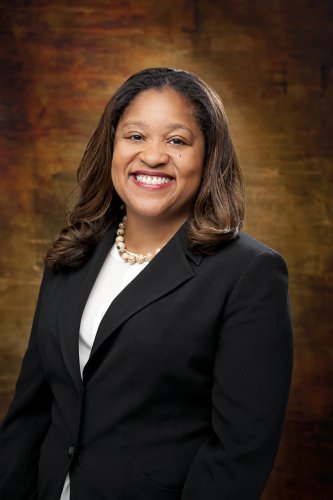
Angela is a professor at UNT Dallas College of Law in Dallas, where she is Assistant Director of Experiential Education. Prof. Downes teaches clinical courses and the 40-hour basic mediation course, as well as “Domestic Violence and the Law: An Innovative Approach to Interpersonal Violence.” Her scholarship focuses on mediation, ADR, vicarious trauma, diversity, cultural responsiveness, and issues of interpersonal violence including domestic violence, human trafficking, and child abuse. Prof. Downes is a former felony prosecutor for the Dallas County District Attorney’s office and an active member of numerous boards and organizations. She was recently appointed by the Texas Governor to serve on the Texas Medical Board as a disciplinary specialist. Prof. Downes is a JAMS neutral on the Dallas panel.

Noam Ebner
Professor of Negotiation and Conflict Resolution
Professor of Negotiation and Conflict Resolution
Creighton University
Noam Ebner is a professor of negotiation and conflict resolution at Creighton University College of Business. He has over twenty years of experience in teaching mediation, negotiation, and conflict topics around the world. Outside of academia, Noam has practiced as an attorney, negotiator, and mediator. He has trained mediators for practice in court systems and other environments and helped establish community mediation centers. Long before that, he was a kid in a movie theater watching a ship getting pulled into another with a tractor beam. Together with Prof. Jen Reynolds of the University of Oregon, he co-edited "Star Wars and Conflict Resolution," with the goal of sharing the knowledge of the negotiation and conflict resolution fields with Star Wars fans across the galaxy.

Kay Elliott
Adjunct Professor
Adjunct Professor
Texas A&M University School of Law
Kay received her J.D. from the University of Oklahoma, her LL.M. from SMU and her Masters in International Business from UTD. She was trained as a mediator in 1982 and has mediated over 2500 cases to settlement. In 1989, her husband Frank Elliott founded the law school which is now Texas A&M University School of Law in Fort Worth. Courses in ADR were offered at the school from the earliest days of its existence. Kay has taught mediation, family mediation, negotiation, arbitration, international business transactions and client counseling at the law school for over 30 years and coaches the ADR teams which have won 11 national championships. The A&M ADR program is currently ranked first in Texas and fourth in the nation.

Dana Garnett
Mediator and Conflict Strategist
Mediator and Conflict Strategist
The Mindful Strategy LLC
Dana Garnett is a TMCA Credentialed Advanced Mediator, CPA, and Founder of The Mindful Strategy, LLC, merging her Big 8 Accounting and International Fortune 100 experience with global life lessons. Dana worked and lived as an expatriate for 22 years including in Lagos, Nigeria; Brussels, Belgium; Casablanca, Morocco; and seven years in Bangkok, Thailand, where she learned mindfulness directly from Eastern philosophy teachings. Litigation resulting in personal hardship and serious financial loss led Dana to practice Alternative Dispute Resolution. Dana’s article “Resolving a Family Business Impasse” is featured in D CEO magazine’s April 2023 issue, and her eight-week online program “Resolving Family Business Conflict” helps family business owners save businesses and bring peace among the families involved.

Jim Guinn
Texas A&M University
Dr. Jim Guinn is a civil and family mediator, keynote speaker, professor, and trainer, with a passion for leadership development. Dr. Guinn is a professor at Texas A&M University and presents at national and international conferences on his work in organizational leadership and conflict resolution. The 2022 “Teacher of the Year” in the department of Education, his focus is on equipping students with practical leadership skills they can apply quickly in the workplace. He has served on the TAM board and currently serves as the director of the Brazos Valley Dispute Resolution Center which provides pro bono mediation and arbitration services throughout Texas.

Daniel Karanja
St. Mary's University, San Antonio, Texas
The Rev. Dr. Daniel N. Karanja holds a Doctor of Philosophy in Conflict Analysis and Resolution from Nova Southeastern University, a Doctor of Ministry from Andover-Newton Theological School, an Executive Certificate in Negotiation from the University of Notre Dame, a Master of Military Operational Art and Science from Air University (Alabama), a Master of Arts Sacred Theology and Conflict Transformation from Boston University, a Master of Arts in Negotiation, Conflict Resolution, & Peacebuilding from California State University, a Master of Divinity from Boston University, and a Bachelor of Arts in Bible and Theology from the East Africa School of Theology. Daniel is a published author, a veteran of 26 years in the United States Military, and is the Africa Partnership Officer for The Episcopal Church.

Elena Kritzer
Attorney/Mediator
Attorney/Mediator
Kritzer Law Firm
Elena Halachian-Kritzer is an attorney licensed in Texas and New York and has been practicing law in Texas for 40 years, representing family, probate, and bankruptcy clients. She became a mediator in 2000 because she believes clients have the ability to settle their cases with the help of professionals. Elena is a TMCA Credentialed Distinguished Mediator and a member of TAM, the College of the State Bar of Texas, various State Bar of Texas sections, the American Bar Association, the Northeast Harris County Bar Association, the National Association of Consumer Bankruptcy Attorneys, and is a Houston Bar Association Fellow. She also serves as Vice President of the Houston Association of Consumer Bankruptcy Attorneys. Elena has been a speaker on mediation, consumer bankruptcy, and family law.
Adam McGough
CEO
CEO
Lone Star Resolutions, LLC
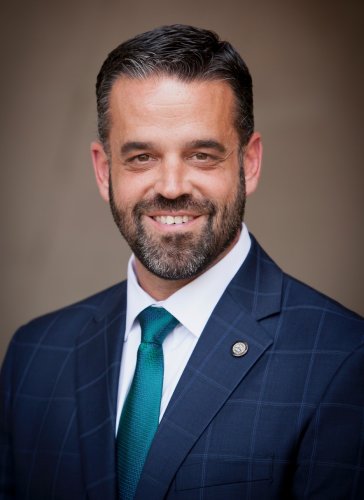
Adam McGough is the President and CEO of Lone Star Resolutions. In over 20 years of mediation, he has mediated over 1500 disputes and has trained over 1000 mediators. Adam’s civic engagements include serving on the Dallas City Council for eight years including a term as the Deputy Mayor. He was the long-term Chair of Public Safety and chaired the Transportation Committee, the Judicial Nominating Committee, and the Committee for Recovery during the pandemic. Before his time on Council, Adam served as Chief of Staff for the Mayor of Dallas where he led GrowSouth and helped lead through the Ebola Crisis in Dallas. Adam also served as the Chief of Community Prosecution and Community Courts where he led the largest section of the Dallas City Attorney’s Office while expanding the program across the entire City. He is a former Special Assistant US Attorney for the Northern District of Texas, and spent several years in private practice specializing in commercial litigation. McGough graduated from the Straus Institute for Dispute Resolution with an LL.M. in Dispute Resolution, and earned his JD from SMU Dedman School of Law and BA in Economics from UT Austin.

Malcolm McGuire
Threat Management Investigator
Threat Management Investigator
Southern Methodist University Police Department
Malcolm McGuire has 20 years of experience as a peace officer, security consultant, and trainer. He is a trained Crisis Negotiator, Mental Health Peace Officer, and Advanced Instructor. In his current role, he investigates and assesses those believed to have the intent to commit acts of violence against members of the SMU community. He has conducted training nationally and internationally on conflict resolution and effective communication. Malcolm holds a BA in English Literature from Wiley College and an MA in Dispute Resolution from Southern Methodist University.
Temitope Popoola
ConflictBridge Mediation & Arbitration
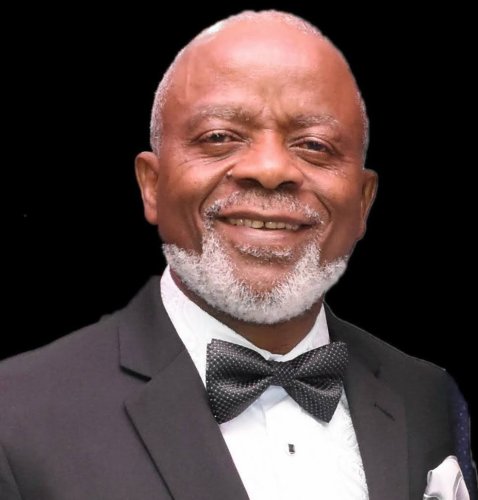
Rev. Temitope Popoola is the Chief Peace Officer of ConflictBridge Mediation & Arbitration in Houston. An experienced ADR practitioner, Rev. Popoola was a member of Ekiti State Judicial Service Commission in his country, Nigeria. He has over 25 years of experience in the corporate sector and is a mentor to several corporate leaders across Africa and beyond. A leading voice on leadership, human capital, and business development, Temitope is author of several books. He is a mediator and negotiator with specific interests in corporate, church, medical, insurance, and family conflicts and also practices arbitration. He is a member of TAM and ACR Houston.

Patricia Porter
President
President
Conflict Connections, Inc.
Patricia “Pattie” Porter, LCSW, PCC, is a 30-year dispute resolution practitioner emphasizing supporting agencies and organizations, leaders, and their teams to address conflict constructively and productively. She mediates, facilitates team dialogue, and coaches leaders in conflict. Pattie assists several federal agencies, including the Department of Defense and Department of Interior’s bureaus. She is on the H-E-B leadership development team facilitating Crucial Conversations and coaching in the Assessment Center. She is an adjunct faculty member at Southern Methodist University’s graduate Dispute Resolution Program and Conflict Connections, Inc., founder and president, based in San Antonio. Pattie served on the TAM Board for several years, including her role as past president.

Jennifer Reitmeyer
TBRI Director
TBRI Director
CASA Child Advocates of Montgomery Co
Jennifer Reitmeyer joined CASA as a volunteer in 2011. After volunteering for six years, she was hired as Case Supervisor. In 2018, she attended the Trust-Based Relational Intervention (TBRI) Practitioner training organized by the Karyn Purvis Institute of Child Development. Jennifer is a part of the TBRI Team at CASA Child Advocates of Montgomery County, which has trained over 150 advocates on the various techniques of TBRI, as well as personally coached families in crisis. She became the TBRI Manager in 2022 to focus on TBRI implementation and training within Montgomery County and surrounding counties and was recently promoted to TBRI Director. Jennifer has completed over 300 hours of training in all aspects of child welfare including TBRI, human trafficking, mental health, Child Protective Services policy and procedures, LGBTQ, and CFE (Collaborative Family Engagement).
Ross W. Stoddard, III
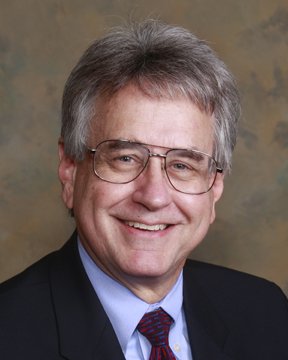
Ross W. Stoddard, III, has been a full-time professional mediator in Las Colinas (Irving), Texas, for the past 34 years. He practiced law for 15 years prior to his training as a mediator in 1989, and has conducted 5,000+ mediations involving over $30+ billion in aggregate claims. For a dozen years, Ross designed and taught the Effective Negotiations and Global Business Environments courses in the SMU Excecutive MBA Program. He has served on the faculty of three dozen mediation training programs and authored a chapter in the ABA’s "The Litigator’s Handbook." Ross currently serves as Co-President of the World Forum of Mediation Centres (of the Union Internationale des Avocats [UIA] International Association of Lawyers, headquartered in Paris, France). He is blessed to be married to his wife, June, for the past 31+ years; has two sons (legally, step-sons) and six grandchildren; and is awaiting the time to have another rescued Golden Retriever in his life.
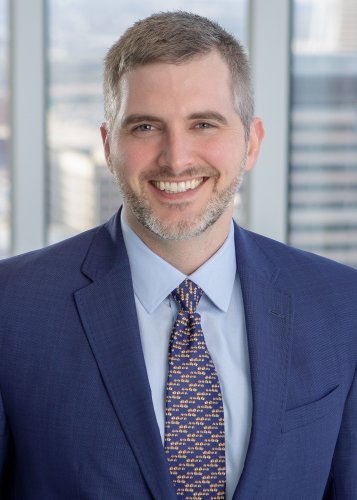
Brent Turman
Bell Nunnally & Martin, LLP
Brent Turman leverages his background in film and television production to communicate compelling arguments that tell clients’ stories to the jury with clarity and persuasion. He is no stranger to resolving contentious disputes and helping his clients protect their assets and intellectual capital. Brent advocates for clients ranging from startups to Fortune 50 companies in a wide variety of business and intellectual property disputes. He has represented clients in complex arbitration and litigation involving business disputes, real estate transactions, and claims of patent, copyright, and trademark infringement. In addition to his trial experience, Brent has served as production counsel for films produced in Texas and helps clients in the entertainment sports industries navigate contracts, negotiations, and business disputes.
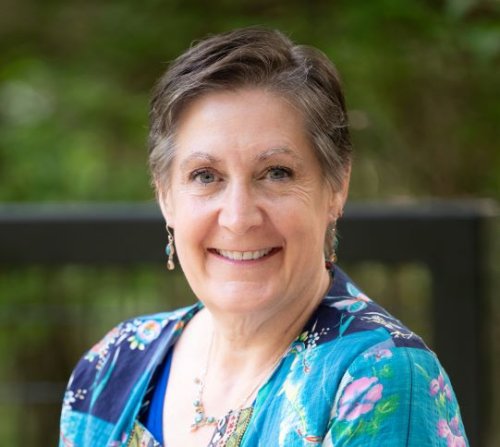
Mardi Winder-Adams
Founder
Founder
Positive Communication Systems, LLC
Mardi Winder-Adams is the go-to divorce coach for high-achieving women. She is dedicated to supporting women in taking control of their separation and divorce to reduce the emotional and financial costs of the process. Mardi offers over 30 years of experience helping women navigate the challenges of high-conflict and high-asset divorces. Mardi is an ICF and BCC Executive and Leadership Coach, Certified Divorce Transition Coach, and TMCA Credentialed Distinguished Mediator. She founded Positive Communication Systems, LLC, and hosts the podcast “The D Shift: Redefining Divorce and Beyond” and the online event “Real Divorce Talks.”

© 2024 Texas Association of Mediators. All rights reserved.
TAM presents information on this website as a service to our members and other Internet users. We make no warranty or guarantee concerning the accuracy or reliability of the content at this site or at other sites to which we link.